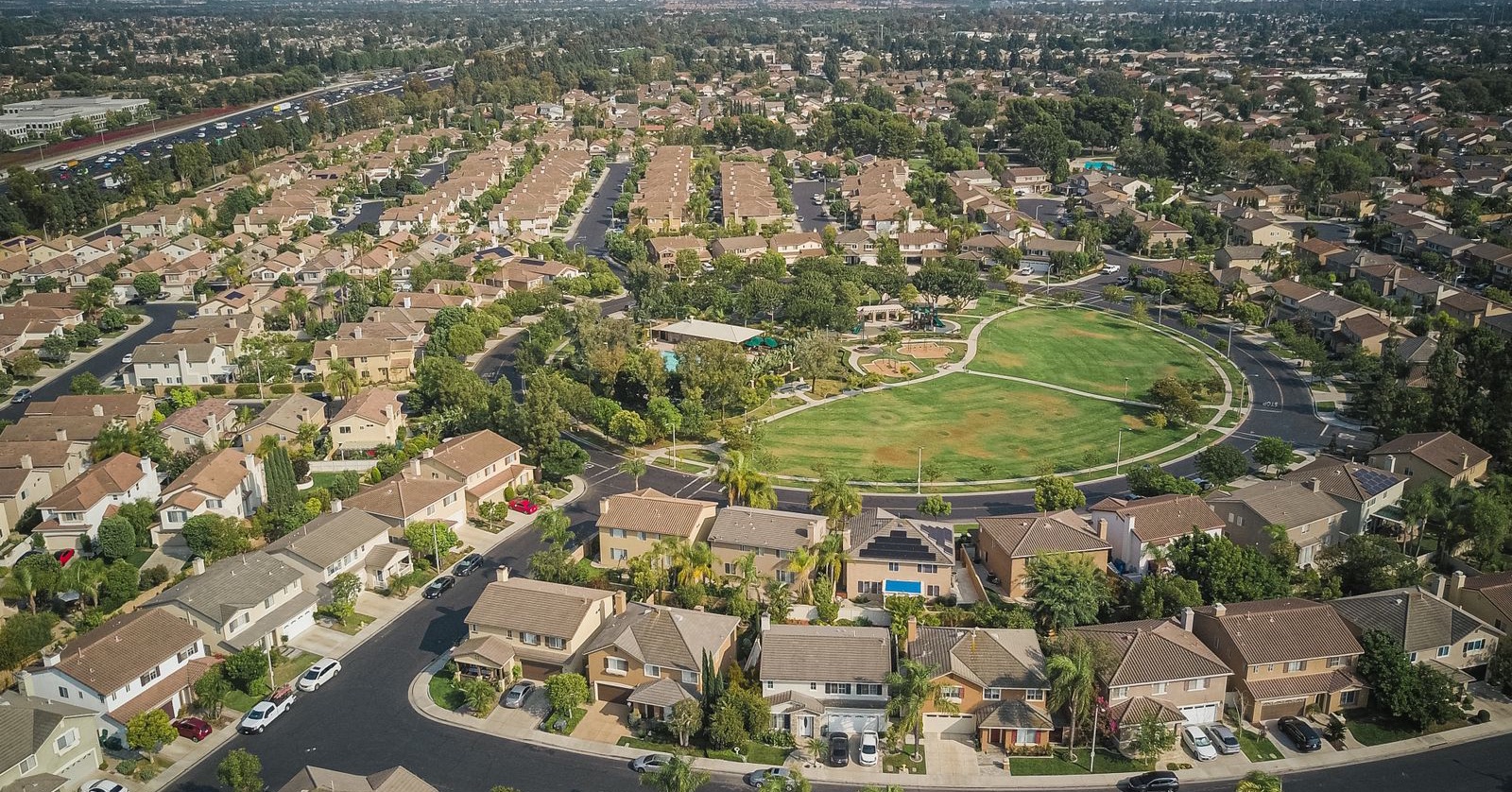
Ask a room full of successful listing agents where their business comes from and a surprising number will point to a map. Not a lead source, not a portal, not a paid ad account — a specific cluster of streets they have quietly owned for years. That is geographic farming: choosing one defined area and committing to become the agent everyone there thinks of first. It is slower than buying leads, but the pipeline it builds is far more durable, and it compounds every single year you stay with it.
This guide walks through how to do it properly — how to choose an area worth your time, how to build genuine authority over twelve months, and how to make sure the seller leads your farm produces actually reach you instead of leaking away.
What geographic farming actually is (and what it is not)
Geographic farming is the practice of marketing to a fixed set of homes — a subdivision, a school zone, a set of streets — consistently enough that residents come to see you as their neighborhood specialist. The goal is not a single closing. It is top-of-mind awareness, so that when a homeowner in your farm decides to sell, list, refinance, or refer a friend, your name is the one that surfaces without them having to think.
It helps to be clear about what farming is not:
- It is not a one-time mailer. A single postcard to 500 homes is an expense, not a strategy.
- It is not a lead list you burn through. You are building a relationship with a place, not chasing a batch of contacts.
- It is not instant. Most agents who farm well see the first real return somewhere between months six and twelve, and the strongest returns in years two and three.
Because it rewards patience, farming filters out most of your competition automatically. The agents who quit after two mailings leave the field open for the one who stays.
Choose the right farm before you spend a dollar
The single biggest predictor of farming success is picking the right area — and this is where most agents get it wrong. They farm where they live, or where the houses are prettiest, instead of where the math works. Before you commit, evaluate any candidate area against four numbers.
1. Turnover rate
Turnover is how many homes in the area sell each year, divided by the total number of homes. Pull the last twelve months of sales in the area from your MLS and divide by the total door count. A healthy farm turns over roughly 6% to 8% or more per year. An area of 400 homes at 7% turnover produces about 28 sales a year — enough opportunity to justify sustained marketing. Below 5%, you may be waiting a very long time for the field to move.
2. Absorption and your realistic share
You will not win every listing, especially early. A common planning assumption is that a well-farmed agent eventually captures 15% to 20% of the listings in their area once they are established. Run the honest version of that math: 28 annual sales at a 20% share is roughly five or six listings a year from one farm — before you count the buyers, referrals, and repeat business those listings generate.
3. Competition and market share
Look at who currently sells in the area. If one agent or team already has a commanding, entrenched share and a visible presence, that is a hard fight. If the listings are spread thinly across many agents with no clear leader, that is an opening. You are looking for a vacuum, not a duel.
4. Price point and size you can afford to serve
Marketing costs are per-home, so a 2,000-door farm is four times the budget of a 500-door farm. Start with an area you can touch consistently — most agents do best beginning with 300 to 500 homes they can market to every four to six weeks without going broke. You can always expand once the first farm is producing.
A rule of thumb from agents who farm profitably: never start a farm you cannot afford to market to for at least eighteen months straight. Consistency, not reach, is what wins.
The 12-month farming calendar
Presence is built through repetition and usefulness, not through a single clever campaign. Here is a month-by-month cadence you can adapt. The theme moves from introduction, to usefulness, to authority.
Months 1–3: Establish that you exist
- Month 1: Send an introduction — who you are, that you specialize in this specific neighborhood, and one genuinely useful stat about the local market. Pair it with a recent sold comp from a nearby street so it is relevant, not generic.
- Month 2: Send a “just sold” or “market snapshot” piece with real numbers — average days on market, list-to-sale ratio, median price in their area. You are training residents to associate you with local data.
- Month 3: Walk the farm. Knock on a reasonable number of doors, introduce yourself, and hand over something of value — a market report or a seasonal home-maintenance checklist. Even a 10% conversation rate at the door builds recognition your mail alone cannot.
Months 4–6: Become genuinely useful
- Month 4: Provide a service, not a pitch — a list of trusted local vendors (roofers, painters, lawn care), or a “what your home is worth” offer with a QR code that leads to a simple valuation request.
- Month 5: Host something. A small neighborhood event, a shred day, a food-truck evening, or a client-appreciation gathering that farm residents are invited to. Events convert cold recognition into warm relationships faster than any postcard.
- Month 6: Send your first “six-month market review.” Show what has happened to values since January. This is the point where the residents who ignored your first three mailers start to notice the consistency.
Months 7–12: Compound your authority
- Months 7–9: Keep the market updates flowing, layer in helpful seasonal content, and celebrate every new listing and sale you earn in the area — each “just listed” and “just sold” piece is social proof that you are the one moving homes here.
- Months 10–12: Reconnect personally with everyone who has raised a hand — requested a valuation, come to an event, or replied to a mailer. Send a year-end market recap and a preview of what next year holds for local sellers. By now you should have a warm list you can call by name.
The pattern underneath the calendar is simple: show up on a predictable rhythm, always lead with usefulness, and make every touch unmistakably local. A homeowner should be able to tell your mail apart from every other agent’s at a glance.
Capture the leads your farm produces — don’t let them leak
Here is the mistake that quietly kills farming ROI: an agent spends a year building recognition, a resident finally decides to explore selling — and then the only path to raise their hand is to call a cell number or text an agent they are not yet sure they trust. That friction loses more warm sellers than most agents realize.
Every piece of your farm marketing should point to a low-pressure, no-phone-call way to respond. A QR code on a postcard, a short link in a door hanger, and a clean landing page for “What is my home worth?” let a curious homeowner engage on their own terms — at 9 p.m. on a Sunday, without committing to a conversation. That is exactly the kind of capture OnSight LeadGen is built for: branded QR codes and mobile landing pages that turn a mailer, a yard sign, or an event into a captured contact, then route that lead to you instantly with automated follow-up so nobody sits in a spreadsheet for three days going cold.
A few principles for capturing farm leads well:
- One clear action per piece. “Scan for your home’s value” beats a postcard cluttered with five options.
- Make the offer local. A valuation for their neighborhood outperforms a generic “free home evaluation” every time.
- Respond in minutes, not days. The homeowner who scanned your QR code is interested right now. Automated instant follow-up is the difference between a captured lead and a lost one.
- Track the source. Know which mailer, sign, or event produced each lead so you can spend more on what works.
Track the numbers so you know it is working
Farming feels like a leap of faith in the early months, so instrument it. Keep a simple scorecard and review it quarterly:
- Doors marketed and frequency — are you actually hitting your cadence, or slipping?
- Cost per home, per year — your total farm spend divided by door count. This is your break-even math.
- Leads captured — valuation requests, event sign-ups, replies, and calls, tagged by source.
- Appointments and listings won — the numbers that actually pay for the farm.
- Your market share trend — your listings in the area as a percentage of total listings, tracked over time. This is the truest signal that your presence is growing.
A farm that is working will show captured leads rising within a few months and market share creeping upward within a year, even before the closings catch up. If after twelve honest months you see no movement in recognition or captured leads, the problem is usually the area or the consistency — not the idea of farming itself.
Common farming mistakes to avoid
- Quitting too early. The agent who mails three times and stops has simply paid to warm up the field for whoever comes next.
- Marketing yourself instead of serving the resident. Nobody keeps a postcard that is a photo of you. They keep the one that tells them what their house is worth.
- Choosing the area with your heart, not the math. Your own street may have a 3% turnover rate. Farm where homes actually sell.
- Farming too big, too soon. A 300-home farm you touch every month beats a 1,500-home farm you touch twice a year.
- No capture mechanism. Recognition without an easy way to raise a hand is awareness you cannot bank.
Farming is a compounding investment
Geographic farming is unglamorous. It asks you to spend money before you see returns, to stay consistent when nothing seems to be happening, and to serve a neighborhood long before it serves you back. That is precisely why it works — most agents will not do it. The ones who commit end up with something a paid-lead budget can never buy: a place where their name is the market, where listings come to them, and where every year of consistency makes the next year easier.
Pick your area with the math. Build a twelve-month rhythm of useful, unmistakably local touches. And make sure every one of those touches gives a curious homeowner a friction-free way to raise their hand — so the presence you worked a year to build turns into the listings you were farming for all along.